Beginners approaching the world of film—whether as aspiring critics, content creators, or simply more engaged viewers—often encounter a specialized vocabulary that can obscure meaning rather than clarify it. Understanding fundamental film terms is not merely about sounding knowledgeable; it's about dissecting cinematic choices, analyzing narrative structures, and appreciating the craft behind the moving image. This foundational glossary provides essential definitions, breaking down complex concepts into accessible explanations, enabling a more informed engagement with film as an art form and a commercial product. Mastering these terms allows for clearer communication within creative teams, more precise content analysis, and a deeper appreciation for the strategic decisions made during a film's production.
Understanding Key Production Roles
Director
The director serves as the primary creative visionary for a film. They are responsible for translating the screenplay into a visual story, guiding the actors' performances, and overseeing the artistic and dramatic aspects of the production. Their influence shapes the film's tone, style, and overall narrative execution, ensuring a cohesive vision from pre-production through post-production.
Producer
The producer functions as the project manager of a film, overseeing its financial, administrative, and logistical aspects from conception to distribution. This role involves securing funding, hiring key personnel (including the director), managing the budget, and ensuring the production stays on schedule. Producers are instrumental in bringing a film to fruition by managing resources and mitigating risks.
Cinematographer (Director of Photography)
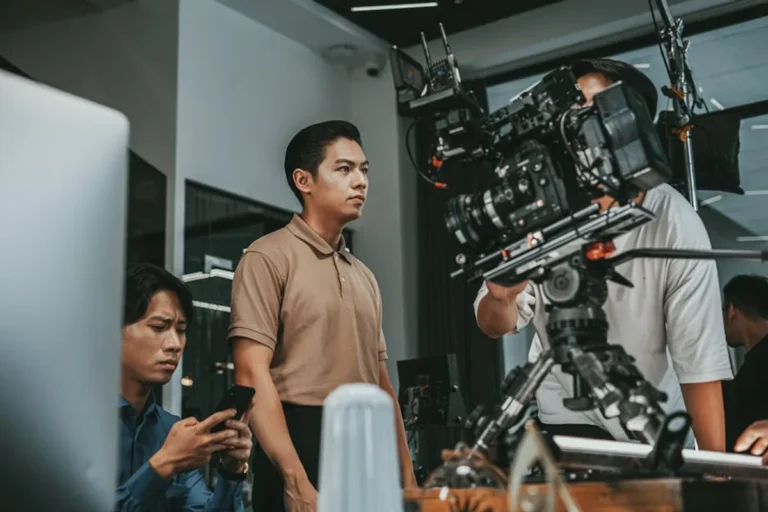
The cinematographer, often referred to as the DP, is responsible for the film's visual aesthetic. They work closely with the director to realize the artistic vision through camera operation, lighting, and framing. The DP makes critical decisions about shot composition, camera movement, and lighting setups, directly influencing the film's mood, atmosphere, and visual storytelling.
Editor
The editor's role is crucial in post-production, where they assemble raw footage into a coherent and compelling narrative. This involves selecting the best takes, sequencing shots, and fine-tuning the pacing and rhythm of the film. The editor's choices significantly impact the story's emotional resonance, clarity, and overall impact on the audience.
Essential Technical Terminology
Shot Types and Framing
Shot types dictate how much of the subject and its surroundings are visible within the frame, conveying different levels of intimacy, context, and emotional weight:
- Extreme Long Shot (ELS): Establishes setting, often showing human figures dwarfed by their environment to emphasize scale or isolation.
- Long Shot (LS): Shows the entire human figure, emphasizing their interaction with the immediate surroundings and broader context.
- Medium Shot (MS): Frames a character from the waist up, focusing on body language and dialogue without losing some environmental context.
- Close-Up (CU): Focuses on a specific detail, typically a face, to convey emotion, reaction, or draw intense audience attention.
- Extreme Close-Up (ECU): Isolates a very small detail, such as an eye or a mouth, for intense emotional impact, symbolic emphasis, or to highlight minute details.
- Over-the-Shoulder Shot (OTS): Positions the camera behind one character, looking at another, commonly used in dialogue scenes to show perspective and listener reaction.
Camera Movement
Camera movements are deliberate choices that guide the audience's attention, reveal information, or create dynamic visual experiences:
- Pan: A horizontal rotation of the camera from a fixed axis, often used to follow action, reveal expansive scenery, or shift audience focus across a scene.
- Tilt: A vertical rotation of the camera from a fixed axis, used to scan a subject from top to bottom, reveal height, or emphasize a character's gaze.
- Tracking Shot (Dolly Shot): The camera physically moves along a track or dolly, maintaining a consistent distance from the subject. This creates a dynamic perspective, often following characters or revealing environments in motion.
- Crane Shot: The camera moves through the air on a crane, offering expansive views, dramatic entrances or exits, or a sense of omnipresence.
Lighting Techniques
Lighting is a fundamental tool for creating mood, depth, and visual emphasis:
- Three-Point Lighting: A standard setup using a key light (main source illuminating the subject), a fill light (softens shadows created by the key light), and a back light (separates the subject from the background, adding depth).
- High-Key Lighting: Characterized by bright, even illumination with minimal shadows and low contrast. Often used in comedies or musicals to create an upbeat, optimistic, or glamorous mood.
- Low-Key Lighting: Features high contrast, deep shadows, and limited fill light. Commonly employed in thrillers, horror, or film noir to create suspense, drama, and a sense of mystery.
Sound Design
Sound design encompasses all audio elements in a film, contributing significantly to immersion and emotional impact:
- Diegetic Sound: Sound that originates from within the film's world and is heard by the characters (e.g., dialogue, on-screen music, footsteps, ambient noise).
- Non-Diegetic Sound: Sound added to the film's world for audience effect, not heard by the characters (e.g., background musical score, voice-over narration, sound effects added for dramatic emphasis).
- Foley: The reproduction of everyday sound effects added in post-production to enhance audio quality and realism. Foley artists create sounds like rustling clothes, breaking glass, or footsteps to synchronize with on-screen action.
Narrative and Genre Elements
Genre
Genre refers to the categorization of films based on shared conventions, themes, and stylistic elements (e.g., horror, comedy, drama, science fiction, western). Understanding genre helps audiences form expectations and provides a framework for filmmakers to explore specific narrative and visual tropes. It also serves as a critical marketing tool.
MacGuffin
A MacGuffin is a plot device, often an object, goal, or piece of information, that drives the narrative forward but is ultimately unimportant in itself. Its primary function is to motivate characters and generate suspense, as famously utilized by Alfred Hitchcock. The audience's interest lies in the pursuit, not the item's inherent value.
Deus ex Machina
"God from the machine" is a plot device where an unexpected, artificial, or improbable character, object, or event is introduced suddenly to resolve a seemingly impossible situation. While it can provide a quick resolution, it is often criticized for undermining narrative coherence and character development by offering an unearned solution.
Fourth Wall
The fourth wall is the imaginary "wall" separating the fictional world of the film from its audience. "Breaking the fourth wall" refers to when a character directly addresses the audience, acknowledges their presence, or otherwise shows awareness of being in a fictional construct. This technique can be used for comedic effect, dramatic emphasis, or to create a direct connection with viewers.
Post-Production Basics
ADR (Automated Dialogue Replacement)
ADR is the process of re-recording dialogue in a studio after filming. This technique is typically employed to improve audio quality, change lines for narrative or censorship reasons, or replace lines recorded in noisy or uncontrolled environments. It ensures clear, crisp dialogue in the final cut.
VFX (Visual Effects)
VFX refers to digitally created or manipulated imagery used to enhance or create elements that cannot be filmed practically. This can range from subtle background enhancements to entirely computer-generated characters or environments. VFX allows filmmakers to realize imaginative worlds and complex sequences beyond the constraints of live-action filming.
Color Grading
Color grading is the process of altering and enhancing the color of a motion picture, video image, or still image electronically. This is done to evoke specific moods, correct inconsistencies between shots, and establish a cohesive visual style for the entire film. Color grading can dramatically impact the emotional tone and aesthetic quality of a scene.
Pro Tip: When analyzing a film, consider how these technical and narrative elements work in concert. A close-up combined with low-key lighting and non-diegetic suspenseful music communicates significantly more than any single element alone. This synergy is where a film's true impact often resides.
Applying Your New Film Vocabulary
Understanding this fundamental film glossary equips you to move beyond passive viewing. You can now articulate specific observations about a director's style, discuss the strategic use of cinematography, or pinpoint narrative strengths and weaknesses with precision. For content creators, this vocabulary facilitates more precise communication with production teams and enables the creation of more insightful analytical content. For marketers, it allows for a deeper understanding of target audience appeal based on genre conventions and stylistic choices. This knowledge forms a critical foundation for anyone looking to engage with film on a more professional or analytical level, fostering a richer appreciation for the medium.
Frequently Asked Questions About Film Terminology
What is the difference between a producer and a director?
A director is the primary creative visionary, guiding the artistic and dramatic aspects of a film. A producer is responsible for the logistical, financial, and administrative management of the production, ensuring the film gets made on time and within budget.
What does "mise-en-scène" mean?
Mise-en-scène refers to everything that appears within the frame of a shot, including setting, props, costumes, hair, makeup, and actor blocking. It encompasses all the visual elements deliberately placed to convey meaning or mood, contributing to the film's overall aesthetic.
Why is understanding film terms important for content creation?
For content creators, a solid grasp of film terminology allows for more precise analysis, critique, and discussion of films. It enables clearer communication with collaborators, helps in identifying trends, and ultimately leads to more authoritative and engaging content for an audience interested in cinema.