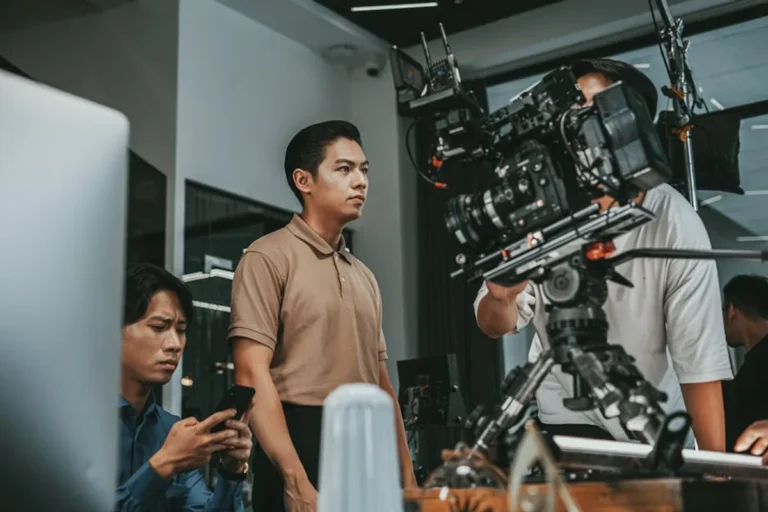
Navigating the vast landscape of cinematic adaptations requires a discerning eye, particularly when evaluating films derived from beloved literary works. The challenge lies in translating the intricate narratives, character depth, and thematic nuances of a book into a visual medium, often necessitating creative interpretation while retaining the source material's essence. This selection focuses on films that not only achieved critical and commercial success but also demonstrated exceptional skill in capturing their literary origins, often elevating the story through cinematic craft rather than merely replicating it. For viewers seeking compelling storytelling rooted in established narratives, understanding the strengths and compromises of these adaptations is key to selecting an engaging experience.
What Defines a Successful Book-to-Film Adaptation?
A truly successful adaptation extends beyond mere plot fidelity. It synthesizes several critical elements to create a distinct yet resonant artistic work. Key criteria include:
- Fidelity vs. Interpretation: The best adaptations find a balance, honoring the source's core themes and character arcs while making necessary structural or tonal changes for the screen. Strict adherence can sometimes result in a dry, uncinematic experience, while radical departures risk alienating the original readership.
- Cinematic Vision: A director's ability to translate prose into compelling visuals, soundscapes, and performances is paramount. This involves effective pacing, visual storytelling, and leveraging the medium's unique capabilities to evoke the book's atmosphere and emotional impact.
- Casting and Performance: The choice of actors and their ability to embody complex literary characters significantly influences an adaptation's reception. A strong performance can elevate even a slightly modified character arc.
- Critical and Audience Reception: While not the sole determinant, broad critical acclaim and positive audience engagement often signal an adaptation's success in connecting with both new viewers and fans of the original work.
- Cultural Impact and Longevity: Enduring adaptations often transcend their source material, becoming cultural touchstones in their own right and influencing subsequent films or media.
1. The Shawshank Redemption
Adapted from Stephen King's novella "Rita Hayworth and Shawshank Redemption," this film stands as a testament to profound character development and enduring hope within oppressive confines. Director Frank Darabont meticulously crafts a narrative that, while set in a brutal prison, focuses on the resilience of the human spirit and the quiet defiance of its protagonist, Andy Dufresne. The film expands on King's relatively concise prose, particularly in developing the supporting characters and the visual language of incarceration, making the emotional beats resonate with greater impact. It avoids overt sentimentality, instead building its emotional power through understated performances and a carefully constructed plot that unfolds with deliberate precision.
Best For: Viewers seeking a deeply moving drama centered on themes of hope, perseverance, and justice, even in the bleakest circumstances.
Pros:
- Exceptional character arcs for both Andy Dufresne and Red, allowing for a deep emotional investment.
- Visually translates the oppressive atmosphere of prison life without resorting to gratuitous violence.
- The narrative structure builds suspense and payoff effectively, culminating in a widely acclaimed resolution.
- Strong performances from Tim Robbins and Morgan Freeman anchor the film's emotional core.
Cons:
- Some critics argue its optimistic ending, while earned, slightly softens the novella's darker undertones regarding the enduring psychological scars of imprisonment.
- The film's deliberate pacing might not appeal to audiences accustomed to faster-moving narratives.
Verdict: A masterclass in adaptation that not only honors its source material's spirit but also enhances its emotional and thematic depth, solidifying its place as a cinematic benchmark for resilience.
2. The Godfather
Francis Ford Coppola's adaptation of Mario Puzo's novel is a landmark in cinematic history, transcending its crime genre origins to become a profound exploration of family, power, and the American Dream. Puzo himself co-wrote the screenplay, ensuring a faithful yet streamlined transfer of the novel's sprawling narrative. The film condenses certain subplots and character backstories, focusing intensely on the Corleone family's internal dynamics and Michael Corleone's transformation. Its strength lies in its operatic scope, iconic performances, and meticulous attention to detail, creating an immersive world that feels both grand and intimately personal. The adaptation succeeds by distilling the novel's core themes into a tightly woven, visually stunning epic.
Best For: Audiences interested in complex character studies, epic crime dramas, and examinations of power dynamics within a family and societal context.
Pros:
- Pioneering cinematography and production design establish a distinctive, enduring visual style.
- Iconic performances, particularly from Marlon Brando and Al Pacino, define their respective characters.
- The screenplay expertly condenses a dense novel while maintaining its thematic integrity and narrative thrust.
- Explores universal themes of loyalty, betrayal, and the corrupting influence of power with nuance.
Cons:
- The film's length and deliberate pacing can be challenging for some viewers.
- Certain subplots from the novel, particularly those involving secondary characters, are either omitted or significantly reduced, which might disappoint some purists.
Verdict: An exemplary adaptation that elevates its source material through cinematic artistry, creating a cultural touchstone that remains profoundly influential.
3. To Kill a Mockingbird
Robert Mulligan's 1962 film adaptation of Harper Lee's seminal novel is a rare instance where the cinematic version is often considered as impactful as the literary one. The screenplay, penned by Horton Foote, deftly captures the novel's gentle pacing, moral gravity, and the perspective of young Scout Finch. It focuses primarily on the trial of Tom Robinson and Atticus Finch's unwavering moral compass, while subtly weaving in the coming-of-age elements and the mystery of Boo Radley. The film's black-and-white cinematography evokes the era and tone of the book, and Gregory Peck's portrayal of Atticus Finch became the definitive image of the character, embodying integrity and quiet strength.
Best For: Viewers seeking a timeless drama exploring themes of racial injustice, moral courage, and childhood innocence.
Pros:
- Gregory Peck's Oscar-winning performance as Atticus Finch is a definitive portrayal, embodying the character's integrity.
- The film effectively translates the novel's poignant tone and moral lessons without becoming didactic.
- Strong child performances convey the innocence and dawning understanding of the young protagonists.
- Black-and-white cinematography enhances the period setting and thematic weight.
Cons:
- Some minor subplots and character details from the novel are necessarily condensed or omitted, potentially reducing the overall richness for devout readers.
- Its deliberate pace, while fitting for the story, may not appeal to all modern audiences.
Verdict: A faithful and emotionally resonant adaptation that captures the novel's heart and moral compass, delivering a powerful and enduring cinematic experience.
4. The Lord of the Rings: The Fellowship of the Ring
Peter Jackson's monumental undertaking to adapt J.R.R. Tolkien's "The Lord of the Rings" began with "The Fellowship of the Ring," setting a new standard for fantasy epics. This film successfully translates the intricate world-building, diverse characters, and grand narrative scope of Tolkien's first volume. Jackson, along with co-writers Fran Walsh and Philippa Boyens, made judicious choices about what to include and what to streamline, preserving the core journey and character dynamics. The film's innovative visual effects, practical sets, and New Zealand landscapes brought Middle-earth to life with unprecedented authenticity, making it accessible to a wider audience while satisfying many long-time fans. Its commitment to the source material's tone and thematic depth, combined with cinematic spectacle, made it an instant classic.
Best For: Fans of epic fantasy, intricate world-building, and heroic journeys, as well as those seeking a benchmark for ambitious literary adaptations.
Pros:
- Groundbreaking visual effects and production design create a truly immersive Middle-earth.
- Strong ensemble cast delivers compelling performances, embodying iconic characters.
- Balances faithful adaptation of key plot points with necessary cinematic pacing and condensation.
- Effectively establishes the vast scope and emotional stakes of the overarching narrative.
Cons:
- Some minor character interactions and specific lore details from the novel are omitted or altered, which can be a point of contention for purist fans.
- The film's length and introduction of numerous characters require significant viewer investment.
Verdict: A visionary adaptation that successfully translates a beloved, complex fantasy novel into a cinematic masterpiece, setting the stage for an unforgettable trilogy.
5. One Flew Over the Cuckoo's Nest
Milos Forman's 1975 film, based on Ken Kesey's novel, is a powerful and unsettling exploration of rebellion against oppressive systems. While Kesey's novel is narrated by Chief Bromden, a seemingly catatonic patient, the film shifts the perspective to focus more directly on Randle McMurphy, making his defiant spirit the central force. This change allows for a more direct and visceral confrontation with the authoritarian Nurse Ratched. The film captures the novel's dark humor and tragic undertones, propelled by Jack Nicholson's iconic performance as McMurphy. Its strength lies in its raw emotional intensity and its unflinching portrayal of institutional power dynamics, making it a searing critique of conformity and control.
Best For: Viewers who appreciate intense character-driven dramas, psychological studies, and critiques of institutional power and conformity.
Pros:
- Jack Nicholson's electrifying performance as McMurphy became a career-defining role.
- Louise Fletcher's portrayal of Nurse Ratched is chillingly effective, making her an iconic antagonist.
- The film vividly captures the oppressive atmosphere of the mental institution and the struggle for individuality.
- Explores profound themes of freedom, sanity, and rebellion against authority.
Cons:
- The shift in narrative perspective from Chief Bromden to McMurphy alters some of the novel's allegorical depth and Bromden's internal journey.
- Its bleak subject matter and tragic elements can be emotionally challenging for some audiences.
Verdict: A compelling and emotionally charged adaptation that, despite a narrative shift, powerfully conveys the novel's core themes of defiance and the human cost of institutional control.
6. No Country for Old Men
The Coen Brothers' adaptation of Cormac McCarthy's novel is a stark, brutal, and philosophically dense crime thriller. The film meticulously retains McCarthy's sparse dialogue, relentless pacing, and bleak worldview. The Coens' direction translates the novel's existential dread and moral ambiguity into chilling cinematic tension, using expansive landscapes and precise sound design to amplify the sense of impending doom. Javier Bardem's Anton Chigurh is a terrifyingly faithful rendition of the novel's unfeeling antagonist. The film's power lies in its refusal to offer easy answers, presenting a world where violence is arbitrary and justice often elusive, mirroring McCarthy's uncompromising prose.
Best For: Audiences seeking a dark, philosophical crime thriller with minimal dialogue and intense, sustained tension.
Pros:
- Faithfully captures McCarthy's bleak tone, sparse dialogue, and philosophical themes.
- Javier Bardem's portrayal of Anton Chigurh is an iconic and terrifying cinematic villain.
- Masterful direction from the Coen Brothers creates relentless tension and a distinct visual style.
- Refuses to compromise on the novel's challenging, ambiguous ending, maintaining its thematic integrity.
Cons:
- The film's graphic violence and nihilistic worldview can be off-putting for some viewers.
- Its ambiguous ending and lack of traditional resolution may frustrate audiences accustomed to clear narrative closure.
Verdict: A remarkably faithful and unflinching adaptation that translates McCarthy's stark prose into a chilling, thought-provoking cinematic experience, retaining its challenging thematic core.
7. The Silence of the Lambs
Jonathan Demme's "The Silence of the Lambs," based on Thomas Harris's novel, is a psychological thriller that seamlessly blends horror and procedural drama. The film excels at building suspense through character interaction, particularly the chilling dialogues between FBI trainee Clarice Starling and incarcerated serial killer Hannibal Lecter. The screenplay, by Ted Tally, streamlines Harris's more extensive internal monologues and secondary plotlines, focusing intensely on Clarice's journey and her fraught relationship with Lecter. Jodie Foster and Anthony Hopkins deliver career-defining performances, creating an atmosphere of palpable tension and intellectual cat-and-mouse. The film's success lies in its ability to delve into the psychology of its characters while maintaining a relentless, gripping narrative.
Best For: Enthusiasts of psychological thrillers, suspenseful character-driven narratives, and effective horror without relying solely on jump scares.
Pros:
- Jodie Foster and Anthony Hopkins deliver iconic, Oscar-winning performances that define their characters.
- The screenplay expertly distills the novel's psychological depth and procedural elements into a tight narrative.
- Masterful use of close-ups and sound design creates an intensely claustrophobic and unsettling atmosphere.
- Effectively balances horror elements with a compelling character study of Clarice Starling.
Cons:
- Some of the novel's more explicit descriptions of violence and psychological trauma are toned down for the screen, which some purists might note.
- The depiction of certain characters, particularly Buffalo Bill, has faced criticism regarding its sensitivity.
Verdict: A taut, intelligent thriller that expertly translates its source material's psychological intensity and compelling characters into a landmark cinematic experience.
8. Fight Club
David Fincher's "Fight Club," adapted from Chuck Palahniuk's cult novel, is a provocative and visually audacious critique of consumerism and modern masculinity. Jim Uhls's screenplay captures the novel's sardonic voice, non-linear structure, and shocking twists, while Fincher's direction imbues the film with a distinct, visceral aesthetic. The film expands on the novel's themes of alienation and identity crisis, using innovative visual techniques and a relentless pace to immerse the viewer in the Narrator's deteriorating mental state. While some nuances of Palahniuk's prose are adapted for visual storytelling, the film retains the book's subversive energy and philosophical challenges, making it a powerful and enduring cultural commentary.
Best For: Viewers who appreciate dark, satirical, and thought-provoking films that challenge societal norms and explore themes of identity and consumerism.
Pros:
- David Fincher's distinctive visual style and kinetic editing enhance the novel's chaotic energy.
- Edward Norton and Brad Pitt deliver compelling performances that capture the fractured psyche of the Narrator.
- The screenplay effectively translates the novel's non-linear structure and shocking twists to the screen.
- Offers a potent and enduring critique of consumerism and modern alienation.
Cons:
- The film's graphic violence and cynical worldview can be polarizing and disturbing for some audiences.
- Some thematic subtleties from Palahniuk's prose are necessarily simplified or visually represented, potentially altering certain interpretations.
Verdict: A bold and visually inventive adaptation that captures the novel's subversive spirit and challenging themes, delivering a powerful and enduring cinematic statement.
9. Gone Girl
David Fincher's "Gone Girl," based on Gillian Flynn's best-selling novel, is a meticulously crafted psychological thriller that benefits immensely from Flynn herself adapting her own work. This ensures a high degree of fidelity to the novel's intricate plot, unreliable narration, and dark tone. The film expertly navigates the dual perspectives and shifting timelines, building suspense through carefully placed revelations and a chilling sense of dread. Rosamund Pike's performance as Amy Dunne is particularly acclaimed, capturing the character's complex, manipulative nature. The adaptation succeeds by maintaining the novel's sharp social commentary and its exploration of marriage, media, and perception, making it a captivating and unsettling cinematic experience.
Best For: Audiences who enjoy complex psychological thrillers with unreliable narrators, intricate plots, and sharp social commentary on marriage and media.
Pros:
- Gillian Flynn's own screenplay ensures high fidelity to the novel's intricate plot and narrative voice.
- Rosamund Pike delivers a chilling, Oscar-nominated performance as Amy Dunne.
- David Fincher's direction creates a consistently tense and unsettling atmosphere.
- Effectively explores themes of marriage, identity, perception, and media manipulation.
Cons:
- The film's bleak portrayal of marriage and human nature can be off-putting for some viewers.
- The complexity of the plot and the unreliable narration require close attention, which might be challenging for casual viewing.
Verdict: A masterful and unsettling adaptation that benefits from its author's direct involvement, delivering a faithful yet distinct cinematic psychological thriller.
10. Arrival
Denis Villeneuve's "Arrival," adapted from Ted Chiang's novella "Story of Your Life," is a profound science fiction film that transcends typical genre tropes to explore language, time, and human connection. Eric Heisserer's screenplay makes intelligent structural changes, particularly in how the non-linear narrative unfolds, making it more accessible to a cinematic audience while retaining the novella's intellectual rigor and emotional depth. The film's visual design for the aliens and their language is innovative, and Amy Adams delivers a nuanced performance as Dr. Louise Banks. "Arrival" is a rare adaptation that maintains the intellectual curiosity of its source material while amplifying its emotional resonance through powerful visuals and soundscapes, proving that complex sci-fi can be deeply moving.
Best For: Viewers interested in thoughtful, character-driven science fiction that explores complex philosophical themes like communication, perception, and the nature of time.
Pros:
- Intelligent and emotionally resonant screenplay that honors the novella's core concepts.
- Amy Adams delivers a compelling, nuanced performance as the protagonist.
- Denis Villeneuve's direction creates a visually stunning and atmospheric sci-fi experience.
- Explores profound themes of language, communication, and the human experience with depth.
Cons:
- The film's deliberate pacing and intellectual focus may not appeal to audiences seeking fast-paced action sci-fi.
- Some of the novella's more intricate scientific and linguistic explanations are simplified for cinematic clarity, which might be a minor point for purists.
Verdict: A brilliant and emotionally resonant adaptation that successfully translates complex scientific and philosophical ideas into a deeply moving and visually stunning cinematic experience.